Can I give you some feedback on your feedback?
You, me, and everyone we know could get better at the art of giving feedback.
The debate about feedback at work - how to do it, how not to do it - is ongoing. The jury may still be out, but there’s good evidence to overturn accepted common practice.
For example, my podcast guest Ashley Goodall and his co-author Marcus Buckingham point out in their HBR article and their delightful book, 9 Lies about Work, copious issues with feedback as it’s currently taught in the leadership zeitgeist. A few choice gems:
As they explain in an HBR podcast, most leaders overestimate the importance and impact of critical feedback
We can’t really “rate” someone’s performance as we often do in a 360. Ratings tell us more about the rater than the rate-e
Since most feedback leans into “telling” people what to do differently, it’s usually based on the leader’s view of what good currently looks like, leading to remediation vs innovation.
And McKinsey pointed out in 2022 that “high-quality coaching interactions” were more effective in building empowered employees …the kind who just might come up with unexpectedly innovative approaches vs following a roadmap - and following a roadmap blindly in this increasingly volatile environment is less and less of a good idea.
We also know from our own experience that the mere phrase “Can I give you some feedback” spikes a stress response. That kind of cortisol spike induces a reflexive fight or flight response, which absolutely inhibits learning, growth, and development, which is the whole point of the feedback. If someone is in that biochemical mode, it’s hard to listen.
Yet despite reading these well-researched points, the itch to give your employees feedback will return. So here is a guide - a set of simple principles to follow to make sure your employees get the feedback they need to perform, AND that YOUR feedback follows guidelines set by the latest neuroscience, and the most ancient and time-tested philosophies.
The Feedback Pyramid
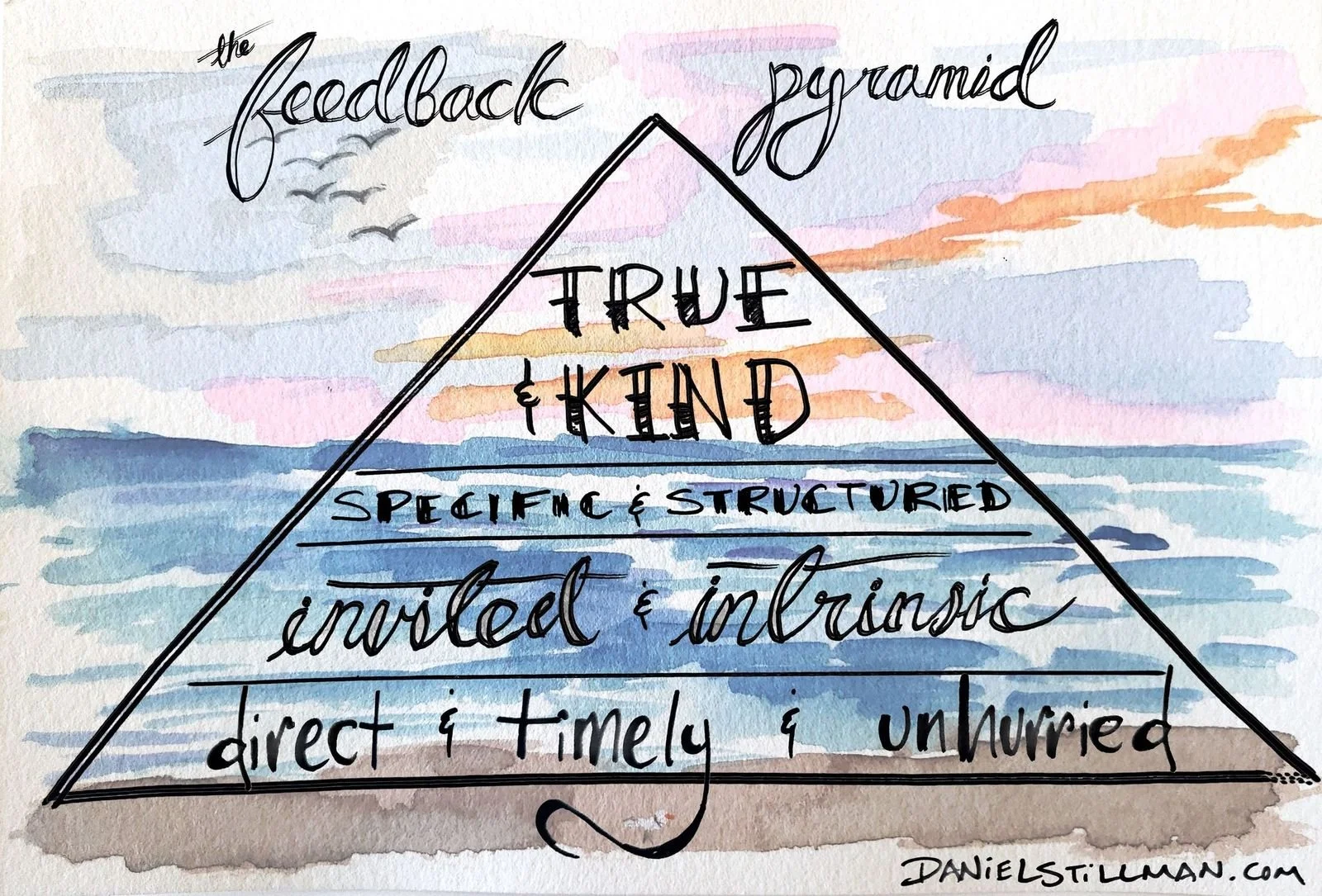
Speak what is True and Kind
Give specific feedback
Give feedback that is well Structured
Only give feedback that has been Invited
Tap into intrinsic motivators when giving feedback
Give feedback directly
Make feedback timely
Don’t rush the process
That’s the whole feedback pyramid in brief if you’re short on time.
Let’s work through them.
1. Speak What is True and Kind
While this might seem so obvious as to not require being said, the point is subtle.
My dad always told me to speak only what was true and kind.
Yet, we’ve all done the following:
Spoken what was kind, but untrue by softening hard news: “Look, it’s not that big of a deal, but…”
Shared what was true and unkind by bluntly sharing bad news: “You screwed the pooch on that!”
Blurted out unkind and untrue things when we were feeling hurt or frustrated.
True and kind is the first filter to pass feedback through.
Is it true? Do we really know that it’s true? What would the videotape show? Can we speak that truth, directly and plainly…and also be kind?
The origin of this True/Kind framework is lost in time. Maybe it’s the Buddha? An ancient Buddhist text directs us to speak the truth affectionately - kind of like kind, but kinder. Speaking with the intent to deeply benefit your employees is a high bar, since I’ve seen so much feedback being offered out of frustration and disappointment - the opposite of affection.
The MOST true and kind feedback you can give is positive feedback. Goodall and Buckingham call it The highest-priority interrupt for a leader - the sharpest arrow in your quiver. Common feedback mythology is that we need to stop bad behavior in its tracks, fast - but then we’re usually focused on “remedial” instruction.
When you catch a team member doing something awesome, acknowledge that excellence immediately and dissect those moments, when things are going right, in front of anyone and everyone. This focus on "replaying what worked" shifts the team member's mindset, making their understanding of excellence more vivid and fostering learning and growth more effectively than solely focusing on error remediation.
2. Give Specific Feedback
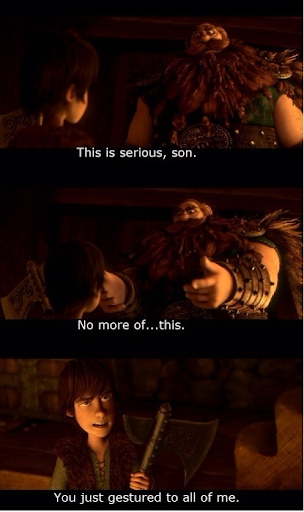
Giving general feedback or feedback based on anonymous sources or feedback that is amorphous makes the feedback hard to receive and hard to follow, like, “You need to stop all of…this,” while gesturing broadly (as in one of my favorite How to Train Your Dragon moments):
The more specific the feedback offered can be, the more actionable and helpful it can be, too.
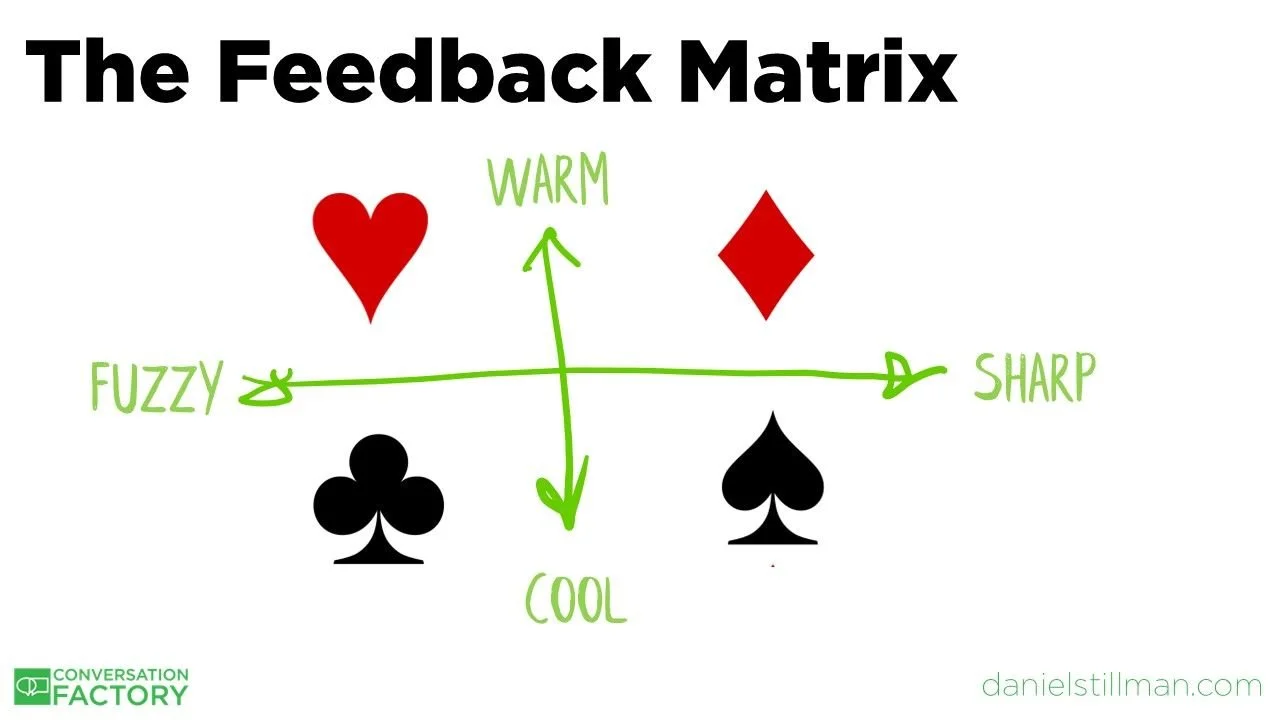
I talk about this simple feedback matrix more here, in an essay about using 1:1s better as a leader, but the basic message is this: Warm and Fuzzy feedback is nice, but Sharp feedback, specific feedback is awesome.
Instead of saying “you need to work on your communication skills,” say “this is exactly when you lost the client.”
Instead of saying “Good job!” say “Three things that I think really landed were _____“
Specificity can also mean limiting the conversation to a single topic.
The anti-pattern is what Marriage therapists call “kitchen sinking” - when any fight becomes a fight about everything.
“This is just like that time when you…”
“You always do this…”
When it’s “always” or "never,” we’re not having a specific conversation about a specific moment. We can have conversations about patterns over time, but grounding those conversations in specific examples is…grounding.
One client, a CEO of a scaling B2C biochemistry company, wanted to host a session for her core team at her offsite, focused on feedback. But time with the whole team was limited - they could only allocate 90 minutes to the session. She wanted to cover giving and receiving what is normally characterized as “constructive feedback.” After some conversation, I suggested they focus only on practicing giving very true and very kind feedback - i.e., “warm/sharp” feedback (read more about that here). She was resistant - after all, how could the team grow if they didn’t focus on gaps? I suggested that with the time they had, a focus on positive feedback would give a higher ROI on time, plus they didn’t have time to do both modalities justice - AND the team dinner was afterwards. Not only did the team move into dinner on a high note, they were wiping away tears of joy, recognition, and connection. In a later conversation, she agreed that focusing on the skill of giving laser-specific positive feedback gave her and the team the social capital to be more frank and direct about other, more challenging feedback.
3. Give Structured Feedback
In my experience coaching teams, I’ve found that having a shared vocabulary of feedback is incredibly helpful. Having a shared, often-used framework for feedback is neurologically helpful, because familiarity creates a sense of safety and clarity.
Rose, Thorn, Bud (RTB) is a good one to start with. It’s based on a reflection framework from the Boy Scouts of America, and it goes like this:
Rose: Something awesome. Roses are sweet smelling, so we share something good, first.
Thorn: Something not awesome. Even painful. Thorns are sharp, so thorn feedback is sharp.
Buds: Buds can become roses, but they are not there yet. So a Bud can be something we’re hopeful for in the future, or something that is good but not great yet.
The RTB framework also leverages a basic truth about neuroscience - positivity makes us feel good. We relax and release positive neurotransmitters. Relationship science also tells us that we need to have a high ratio of positive to negative interactions - 5:1 is recommended. RTB gets us to 2:1, whereas the traditional shit sandwich is basically two pieces of fuzzy positive feedback coating one terrible, blunt piece of feedback.
What’s great about RTB is how extensible it is. It’s great for team or project retrospectives, personal or professional feedback, just about anything.
Of course, frameworks for feedback are myriad! The Center for Creative Leadership version focuses on the SBI…In my podcast conversation Rei Wang and Anita Houssain the co-founders of rapidly scaling, VC-Backed coaching platform The Grand we talk about how they add a coaching spin to this model - adding the opportunity. Rei and Anita talk about regularly giving each other feedback using the SBI/O framework, a powerful way to share “what's really going on” around a challenging situation with someone else.
Situation or data - so we share what the True facts of the matter are (just the facts vs judgements)
Behavior you see - what the video tape would show, ie what the person you are giving feedback to actually did.
Impact it has on you - our own true experience with the issue (or how the company are affected directly - why it matters)
Opportunity for improvement or transformation - what we really want for this person and in this situation.
Using a framework like SBI/O is a great way to frame feedback, to ensure we share what is true and factual and that we also share our own true and accurate (not over- or understated) feelings about the situation.
Breaking down your feedback into these kinds of chunks can make it more “legible” to the person you’re giving it to. Here’s an example at work:
Situation: We have seen in the past that 1-2 days is too short a turnaround for the team to integrate client feedback. We’ve talked about this before, and I’m unhappy about it.
Behavior: You haven’t scoped enough time for these projects again.
Impact: I wind up getting complaints from your team, and we’ve lost staff over this issue. This puts stress on your team - a very negative feedback loop. I know we both want a low-stress team with high retention.
Opportunity: Can we talk about how to improve your ability to push back against unreasonable client timelines?
It’s up to you and your team to experiment and find a set of frameworks and shared language that works best for you and your context - when people know the “chunks” of feedback to expect, it can make it easier to hear.
4. Only give feedback that has been Invited
Giving feedback often happens too late in the game - way after a bad call has been made, a problem has been long ignored, and finally, we HAVE to say something. But the person receiving the feedback often has no idea that something is wrong. Getting blindsided by feedback is terrible and jarring.
My recommendation to leaders I coach is to cultivate a culture of feedback in a three-step process:
1. Ask for feedback regularly. Leaders go first
Ask:
“What feedback do you have for me?”
“What’s something you think I don’t want to hear or can’t hear, but need to hear?”
Get in the habit of asking your direct reports these questions. Then, after you’ve demonstrated that you can take and integrate feedback:
2. Ask your reports what kind of feedback they need
Questions like:
“How are you trying to improve?”
“What kind of feedback would be most helpful?”
Establish a baseline of what kind of feedback you have permission to give and what the improvement goals of your employees are.
Then:
3. Ask if you can point out blind spots or gaps.
Now we have space to say:
“Given that you want to improve (behavior, skill, or result), I have some ideas to share. Would you be open to looking at some of your blind spots?”
My advice: as a leader, you can model that behavior by baking it into your 1:1s with your direct reports. As I discuss in my essay on 1:1s here, leaders can use 1:1s as an unrivaled opportunity to GET more feedback than they GIVE and lead by example.
5. Tap into intrinsic motivators
It’s easy to give someone feedback. What is harder is to ensure that they are going to follow through and do what you suggest.
The best way to make sure any feedback you offer, any advice or corrections suggested are utilized is to tap into intrinsic motivators vs extrinsic motivators. The psychological principle is simple - inside of each adult is a child, and children just like to do what they like to do - Play. Trying to get a little kid to do something in order to achieve something else is just too much for their young brains - the future barely exists for them.
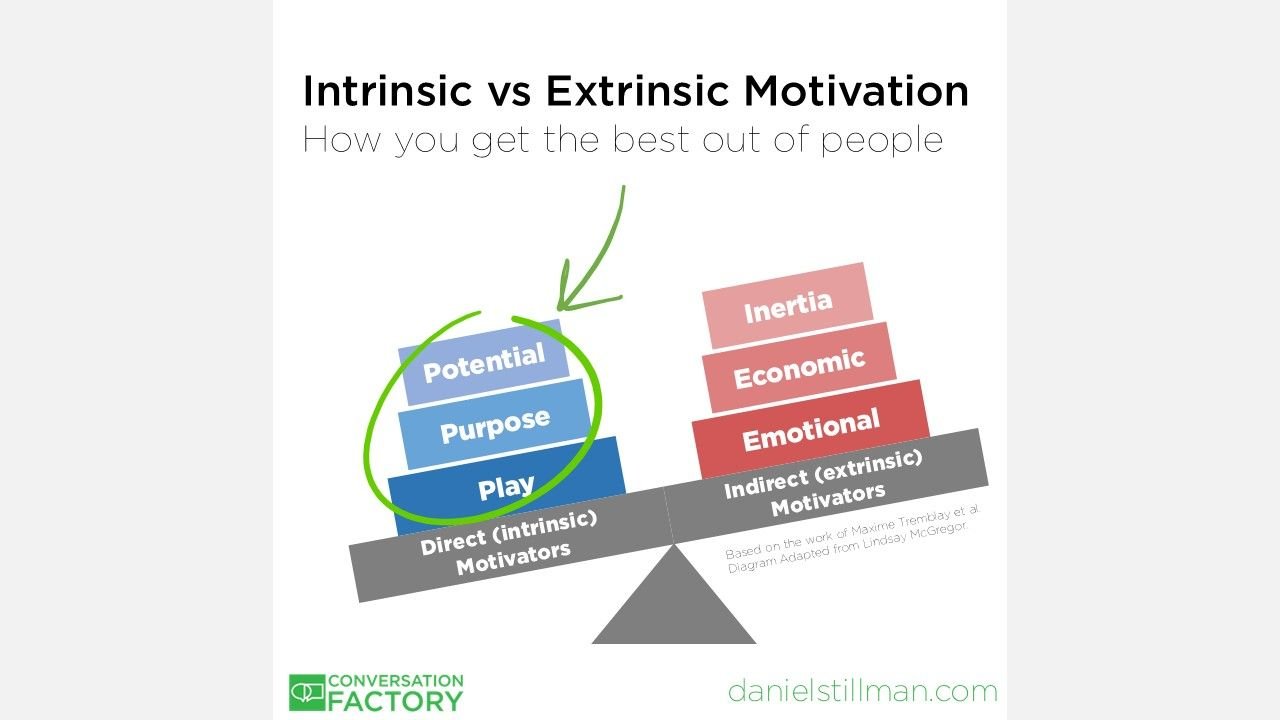
The essential Intrinsic Motivators, in order of decreasing potency, are:
Play
Purpose
Potential
People will do a thing if it’s fun to do, or if it aligns with their purpose, or connects with a potential achievement they want in the future.
Number three, making sure your feedback is invited, is a step towards ensuring you’re staying in the intrinsic feedback lane.
The essential Extrinsic Motivators, in order of decreasing potency, are:
Emotional Pressure
Economic Pressure
Inertia
I’ve seen leaders work from the Extrinsic lane all too often:
“Look, it’s a pain in my ass when you do X. Can you give me a break?” (emotional pressure)
“It’s just better for the company this way. We need to cut costs.” (economic pressure)
“It’s just the way we’ve always done it around here.” (inertia)
None of that feedback is going to be as motivating as tying your needs to the deeper purpose of your employees. You get the best out of people when you appeal to the best within them.
A founder of a privately-backed, B2B AI insurance platform I was working with had a common struggle with their CTO - the conversation over speed vs quality. While the CEO was not saying “get it out the door faster by making the product less good”, when he said “we’re not moving fast enough,” that’s what the CTO heard. It took some intentional effort, but learning to speak the language of the CTO and frame progress in terms of agility, a value the CTO held very deeply (ie, as an intrinsically worthwhile value) the two were able to have more productive conversations about tradeoffs that didn’t feel like accusations, condemnations, or a cattle-prod.
For example:
Old Language: Extrinsic
"We're not moving fast enough." (Heard as: Speed means Less quality, sounds like an accusation or economic or emotional pressure)
New Language: Intrinsic
"Can we explore where our internal processes are hindering the agility we both value, so we can iterate faster on client needs?" (language that speaks to purpose or values)
Not to profile CTOs, but they LOVE to talk about removing bottlenecks in internal processes. And no one will go on record as anti-agility! ;-) This language allows both the CEO and CTO to look at how to make the system better, not direct blame.
6. Give Feedback Directly
“Some people are saying that you need to do better at ____”
Years back, a senior leader I was coaching was burning up after getting this feedback. Burning with curiosity and rage.
They wanted to know who said it, so they could refute it. The indirectness of the feedback - a game of telephone - felt dishonest and hurtful.
I’ve been reading a book called “Ethic of Excellence” by Ron Berger. He teaches teachers about how to invoke pride in students, to invite them to work through community engagement and thoughtful feedback, and multiple drafts of work. Check out his classic short video called “Austin’s Butterfly” here.
He asserts that thoughtful feedback (i.e., critique) is essential to making great work, which he also asserts is the whole point of life: Make great things.
He boils a philosophy of critique down to three principles:
Be Kind
Be Specific
Be Helpful
“Some folks are saying you need to do better at ___” is indirect, unhelpful feedback. After all, how would we know who to ask for feedback after we'd done work to improve the issue?
What I love about the feedback process Berger recommends is that it’s about the work, not the person. The class looks at a piece of work and compares it to a standard, and gives direct feedback about the work. Obviously, it’s implied that the artist needs to make the corrections, but no one is telling them they did a bad job - just that the job could be better. It’s a small but essential shift.
So give feedback directly to the work, not the person
“You need to be more responsive” is giving the person feedback.
“When the client doesn’t hear back from you within 24 hours, problems get amplified. We’ve seen that happen a few times recently, and it’s costing us,” is giving the results or the work the feedback.
The first can feel like an accusation or an indictment. The second is a situation, a behavior, and an impact, and is much easier to receive, process, and act on.
7. Make feedback timely (keep your FQ low)
The longer you wait between the moment you notice feedback being needed and the moment you offer the feedback, the less helpful the feedback will be. Memories fade.
A few years ago, I was hosting a workshop on feedback for a group of leaders. One participant had an employee who was a long-time problem. Over the years, several managers had avoided dealing with this employee’s issues. Like a game of “hot potato” or “not it!”, the employee had gotten shuffled around, again and again. Now this poor leader was the one holding the bag. Where should they even start?! The years of avoiding direct feedback in a timely manner had left a stinky mess for one person to finally clear up.
Make your feedback timely - future you will be grateful.
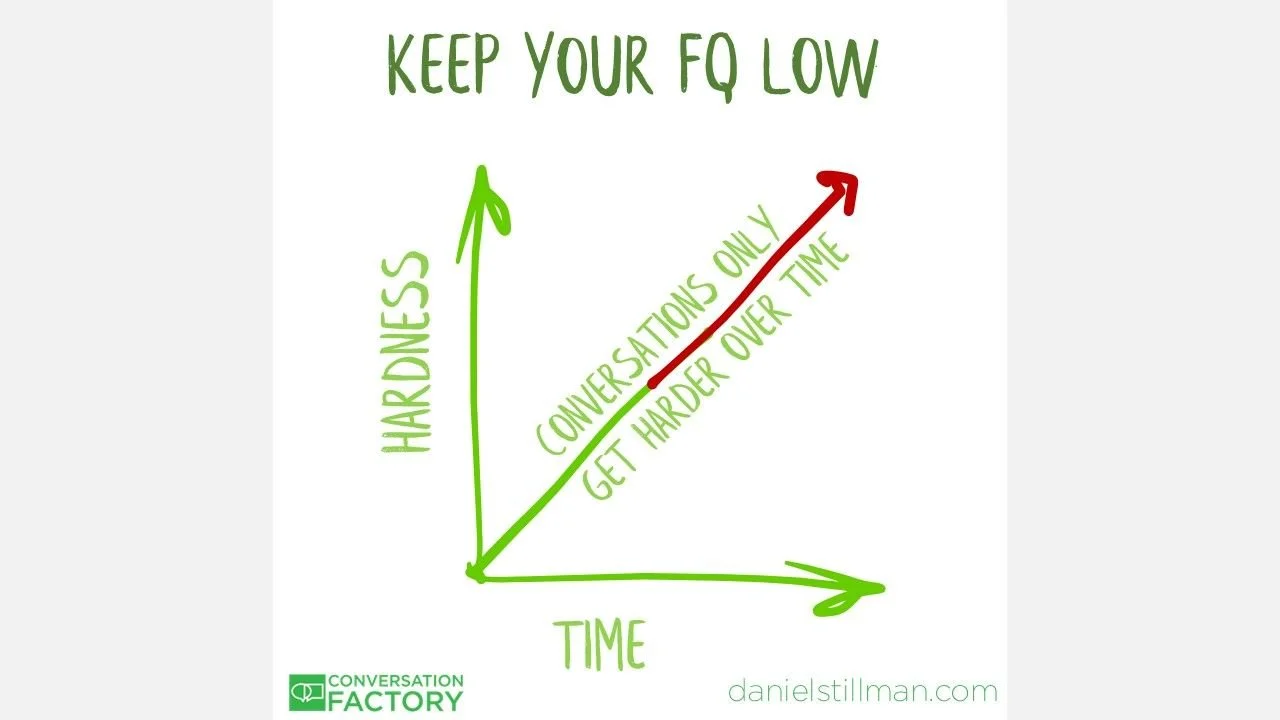
We could measure this feedback skill as your FQ - your festering quotient. The simple truth is that hard conversations don’t somehow get easier with time. They fester the longer we put them off.
For co-founders, where the relationship is very much like a marriage, resentments and unprocessed feelings from past disagreements can get pent up and leak or burst out. Another gem from my interview with the co-founders of The Grand is the discussion about how the co-founders focus on regularly giving each other feedback to intentionally avoid this kind of buildup and spillover effect.
It’s usually ideal to give certain feedback in private, with permission, so some delay is sometimes needed. Which brings us to:
8. Don’t rush the process
This is true on two levels:
It often takes time to develop a culture of feedback, where your employees are fully aligned on ways they need to develop and are actively asking for your feedback and coaching. Creating the foundation of shared goals and psychological safety can’t be rushed. Like my mom says: You can’t ripen a banana with a hair dryer. Some things move at the pace they move - human development is one of those things.
You also can’t rush the process of giving someone feedback. Doing it in a regular 1:1 in 30 minutes is hard, especially when those 1:1s are burdened with multiple updates, or are too infrequent. I think of feedback like a luxurious bath - you have to fill up the bath, put on music, light the candles…feedback isn’t a quick shower. Or at least, feedback that sticks, that connects with the goals of the person who’s invited the feedback, takes a bit more time. But like many things that require a bit of investment and patience, it's usually worth it in the long run.
Building a Feedback Culture
The real challenge of feedback is building a culture where the feedback feels safe to be heard. While that takes time, you can get started by looking at your calendar now and identifying one conversation coming up with one colleague, then make a choice to give them some very True and very Kind feedback.
The Feedback Pyramid is a commitment to conversational integrity - Being systematic, research-based, and disciplined in your work relationships. Using these principles, over time, is how you build a high-retention, high-trust organization where every team member is empowered to perform at the peak of their potential and is motivated to seek the feedback they need to continuously excel. Bringing the tools from the Feedback Pyramid into your conversations is a path towards creating a company where people can do the best work of their lives.